
What Homeowners Should Know About Tree Removal
Highlights
- Tree removal may be necessary when a tree presents a serious risk to people or property.
- Dead, damaged, diseased, or unstable trees can become more hazardous during severe weather.
- Homeowners should check structures, power lines, access points, and surrounding landscaping before work begins.
- Professional removal requires careful planning to control falling branches, equipment, and other hazards.
- Homeowners should clarify what is included, including debris removal and stump work.
- Acting early can help reduce the potential for property damage and injury.
When Should Homeowners Consider Tree Removal?
Homeowners should consider tree removal when a tree has become hazardous, severely damaged, or unsuitable for its location. Dead branches, extensive decay, deep cracks, exposed roots, severe leaning, storm damage, and structural defects can all warrant professional assessment.
According to the USDA Climate Hubs, failing trees and limbs in developed areas can contribute to property damage, power outages, blocked roads, and injuries. However, trees positioned close to homes, garages, driveways, paths, or utility infrastructure deserve particular attention. Identifying potential hazards early gives homeowners more time to arrange suitable work rather than waiting for a damaged tree to fail unexpectedly.
What Signs Could Mean a Tree Has Become Hazardous?
Several visible conditions can suggest that a tree has developed structural problems or become a greater risk to the surrounding property. Warning signs include:
- Dead or hanging branches that could fall during windy conditions.
- Deep cracks or splits in the trunk or major branches.
- A new or worsening lean that may indicate root or structural problems.
- Visible decay, cavities, or fungal growth that may signal deterioration.
- Exposed, broken, or disturbed roots that could affect stability.
- Broken tops or major limbs left unstable after severe weather.
Several warning signs occurring together should not be ignored. A professional assessment can determine whether pruning, monitoring, support, or tree removal is the more appropriate option for the property.
Why Is Tree Removal More Complicated Than It Looks?
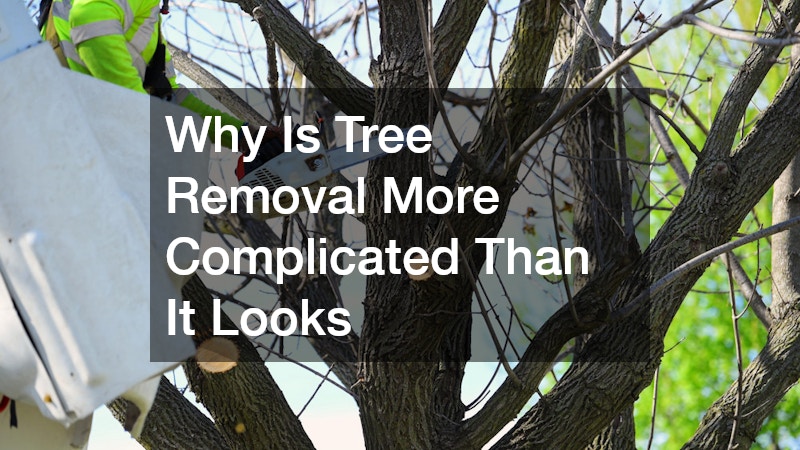
Tree removal is more complicated than cutting through a trunk because the entire tree and surrounding site must be assessed before work begins. Height, weight, natural lean, branch structure, condition, terrain, nearby buildings, and available landing space can all affect the removal method. The Occupational Safety and Health Administration identifies falling branches and trees, overhead power lines, cuts, and falls as significant hazards associated with tree care work. For this reason, tree removal should be treated as a planned safety operation rather than a straightforward landscaping task. Careful assessment helps determine the safest approach for each property and can reduce the likelihood of damage to nearby buildings, vehicles, fences, gardens, or other assets.
What Should Homeowners Check Before Tree Removal Begins?
Homeowners should review the area around a tree and communicate potential hazards before removal starts. Nearby buildings, vehicles, fences, gardens, utility infrastructure, and access routes can all affect how the project is organised. Key checks include:
- Structures: Identify houses, sheds, garages, fences, retaining walls, and other nearby property.
- Power lines: Note electricity and telecommunications lines that may require additional precautions.
- Access: Determine how workers and equipment can reach the tree without unnecessarily damaging lawns or driveways.
- Valuables: Move vehicles, outdoor furniture, equipment, and other removable items away from the work area.
- People and pets: Keep children, visitors, and animals outside the active work zone.
- Clean-up: Confirm whether branches, logs, wood chips, and other debris are included in the service.
Preparing the site can make the work more efficient while reducing unnecessary risks and property damage. It also helps the removal team understand the site’s practical requirements before equipment and workers arrive.
How Does Professional Tree Removal Help Manage Risk?
Professional tree removal helps manage risk through site assessment, suitable equipment, controlled work practices, and knowledge of how trees respond to cutting. The process may involve removing branches first, lowering sections in a controlled manner, or using specialised equipment where there is limited space. OSHA states that tree care work can involve potentially fatal hazards, including falling branches, overhead power lines, cuts, and falls. Professional crews can assess the tree and determine how different sections should be handled based on its condition and surroundings. Proper planning helps keep the work zone controlled while reducing the chance of unintended impacts on nearby property. This approach can be especially important when working around buildings, vehicles, fences, gardens, roads, or utility infrastructure where even a small mistake could result in costly damage.
How Can Homeowners Prepare for a Safer Removal Project?
Homeowners can support a safer removal project by preparing the property and following instructions from the tree care crew. The work zone should remain clear of people and animals, while vehicles and movable belongings should be placed well away from the tree. Homeowners should also tell the crew about underground irrigation, septic components, drainage systems, fences, retaining walls, or other features that may not be immediately visible. The National Wildfire Coordinating Group emphasises risk assessment, situational awareness, and maintaining a secure felling area when dealing with hazardous trees. Keeping the area clear allows workers to concentrate on removal without unnecessary interruptions. It also gives equipment operators sufficient room to manoeuvre and helps prevent people from entering an area where branches, tools, machinery, or tree sections could create hazards.
What Should Homeowners Ask Before Hiring a Tree Removal Service?
Homeowners should ask clear questions about the scope of work, safety arrangements, access, clean-up, and additional services before agreeing to a removal project. Ask whether the quote includes cutting, removal, hauling, stump grinding, wood-chipping, and final site clean-up. Homeowners should also explain concerns about nearby structures, utility lines, restricted access, difficult terrain, or neighbouring properties. If the tree is particularly large, damaged, leaning, or located near power infrastructure, the provider should understand the site’s complexity before work starts. Clear communication helps establish realistic expectations and makes the tree removal process more organised. It is also useful to confirm whether additional charges could apply if unexpected conditions are discovered once work begins, particularly where access is restricted or specialist equipment becomes necessary.
What Happens After a Tree Has Been Removed?
After a tree has been removed, homeowners should make sure the remaining site is safe, accessible, and suitable for its next use. Stump removal or grinding may be handled separately, so homeowners should clarify this before the project begins. The remaining area should also be checked for branches, debris, damaged surfaces, or other hazards created during the work. If the tree was near a driveway, garden, structure, or utility area, further landscaping or repairs may be needed. Homeowners can also review whether other trees show similar warning signs and arrange appropriate maintenance before those issues become more serious. Addressing the remaining work promptly can restore the appearance and usability of the property while reducing the chance that leftover materials become obstacles or attract unwanted pests.
Why Should Homeowners Take Tree Hazards Seriously?
Homeowners should take tree hazards seriously because a structurally compromised tree can threaten people and property, particularly when severe weather increases forces on branches, trunks, and roots. The USDA Climate Hubs explains that tree failures in developed areas can contribute to property damage, infrastructure disruption, injuries, and other consequences. Waiting for a hazardous tree to fall naturally can create a less predictable situation than addressing the problem through planned maintenance or removal. When removal is necessary, careful planning from assessment through final clean-up can help protect the home, surrounding property, and everyone nearby. Taking action before a serious tree hazard escalates can also give homeowners greater control over timing, site preparation, access arrangements, and clean-up. A considered approach helps turn a potentially dangerous situation into a planned property-maintenance project.